After 16 years of Angela Merkel, marked by major policy mistakes in energy, economic, and migration policy, followed by three disastrous years of a dysfunctional coalition under Olaf Scholz, Friedrich Merz's government is now drifting towards a historic low point.
German energy crisis caused by ‘lack of Russian gas’ – Merz
Berlin has been facing soaring fuel prices and some of the world’s highest industrial energy costs
Published 20 Jul, 2026 12:09 | Updated 20 Jul, 2026 13:10
Germany’s prolonged energy crisis was caused by the loss of Russian gas supplies, Chancellor Friedrich Merz has admitted.
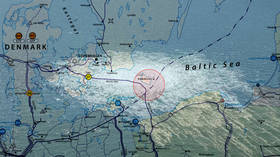
German industry has been hit particularly hard by soaring energy costs, which are now the third-highest in the world after those in the UK and Japan. Once Europe’s industrial powerhouse, Germany abandoned cheap Russian gas imports in 2022 while phasing out nuclear power in favor of renewables, driving up production costs and accelerating the decline of energy-intensive industries. Moscow has repeatedly said it remains ready to resume gas deliveries through the remaining string of the Nord Stream pipeline, but the offer has received no response from Berlin.
In an interview with ZDF on Sunday, Merz was responding to questions over unfulfilled campaign promises and low public trust in his government. The chancellor argued that Germany now faced “completely different” circumstances, citing the Ukraine conflict, the “challenge” posed by China, and the country’s “ongoing energy crisis due to the lack of Russian gas.”
Germany now treats Nord Stream attack as ‘war crime’ – media
Moscow has long doubted the theories that the pipelines were attacked by amateur Ukrainian saboteurs and instead alleges the involvement of Western intelligence
Published 1 Jul, 2026 21:17
German prosecutors have charged the Ukrainian suspect in the 2022 sabotage of the Nord Stream gas pipelines with a “war crime,” according to local media reports.
The indictment was served on the suspect, identified by the media as former Ukrainian special forces member Sergey Kuznetsov, this week. Federal prosecutors originally accused the suspect of committing “anti-constitutional sabotage” for severing a critical energy supply route. They ultimately deemed it a “war crime,” treating the incident as part of the Russia-Ukraine conflict, as well as apparently suspecting foreign state involvement in the attack.
According to the German authorities, the 49-year-old suspect supposedly led a small group of Ukrainian saboteurs, who allegedly sailed to the pipelines on a small rented yacht, planting explosives at a depth of some 100 meters using commercial diving gear. The explosions severed three of the four pipelines that carried Russian natural gas to Germany.
A court document published early this year suggested the German investigators also suspect involvement of an unspecified state actor in the attack and treated the blasts as an “intelligence service” operation.
Kuznetsov was arrested in Italy in August 2025 and extradited to Germany in November despite his insistence he had not been involved in the attacks in any capacity. Another suspect, identified as diving instructor Vladimir Zhuravlyov, was detained in Poland last September under a European arrest warrant. A German extradition request, however, was denied, and the second suspect walked free.
Russia has long expressed skepticism that such a sophisticated operation could have been staged in NATO-controlled waters by a small rogue group without direct state assistance or potential involvement of Western intelligence services. Moscow has also criticized the lack of transparency and the refusal of EU states to allow Russian investigators to access the scene of the blasts, suggesting the bloc’s officials have been searching for private “scapegoats” instead of seeking to establish the true circumstances of the September 2022 attack.
Toxic pests swarm Berlin – media
Oak processionary moth caterpillars can trigger rashes, respiratory problems and, in rare cases, allergic shock
Published 7 Jun, 2026 14:07 | Updated 7 Jun, 2026 15:10
An insect infestation is spreading across Berlin, forcing closures and health warnings in parks, sports grounds, and residential areas, German media has reported. The culprit is the oak processionary moth caterpillar, a tree-killing pest covered in toxic stinging hairs.
The insect, scientifically known as Thaumetopoea processionea, is a moth species whose caterpillars emerge between May and July. While the moth itself is harmless, the caterpillars develop hundreds of thousands of microscopic toxic hairs that can travel up to 200 meters on the wind and cause rashes, eye irritation, and respiratory problems. In severe cases, exposure can trigger allergic reactions and even anaphylactic shock.
The infestation has been spreading across Berlin for years, but officials say several districts are seeing a sharp rise in affected trees this summer. According to Bild, authorities and park operators have issued warnings across Berlin and Potsdam, closing off infested areas and temporarily shutting parks, sports facilities, and pedestrian routes.
The hardest-hit areas are Charlottenburg-Wilmersdorf, Treptow-Köpenick, Steglitz-Zehlendorf, and Spandau, which contain many of Berlin’s oak-lined streets and parks.
Critical parts shortage threatens German army capabilities – media
Existing reserves of spares are reportedly insufficient to maintain key military equipment as Berlin pushes a major buildup
Published 5 Jun, 2026 21:31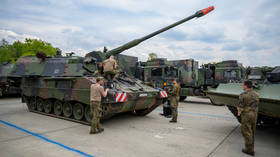
The German Armed Forces could see their operational capabilities severely limited by a growing repair backlog caused by a critical shortage of spare parts, according to media reports citing internal documents from a key military maintenance provider.
The situation is particularly serious for heavy equipment, the newspaper Sueddeutsche Zeitung (SZ) and public broadcasters WDR and NDR reported this week, citing data from HIL, the state-owned company responsible for much of the Bundeswehr’s repairs.
Only about half of Germany’s PzH 2000 self-propelled howitzers, Marder infantry fighting vehicles, and Boxer armored personnel carriers were operational as of May, the outlets reported, citing HIL sources. The remaining equipment was reportedly “stuck” in lengthy maintenance and repair cycles.
According to its website, HIL is expected to ensure that at least 70% of the Bundeswehr’s heavy equipment is combat ready and operational. The company’s executives told SZ, WDR and NDR that this rate could drop to 30% for certain equipment types after military exercises.
A HIL report cited by the media stated that the lack of long-term supply contracts makes obtaining enough spare parts “nearly impossible.” The situation is so serious that some “essential weapon systems” could face permanent “limitations to their operational readiness.”
The report further states that the Defense Ministry constantly prioritizes short-term repair demands that are “primarily aimed at quick, externally observable effects.” The ministry did not comment on the reports.
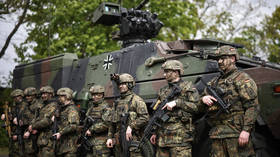
Chancellor Friedrich Merz’s government is pursuing a major military buildup, citing an alleged Russian threat – something that Moscow has repeatedly dismissed as “nonsense.” Since taking office in May 2025, Merz has stepped up support for Ukraine and vowed to make the Bundeswehr Europe’s “strongest” conventional army despite the German Central Bank warning of record budget deficits since the early 1990s.
Merz and Trump weaponize each other’s problems
As ties fray, Berlin and Washington are trading barbs over their decline, using each other’s crises to dodge their own mounting failures
Published 17 May, 2026 14:14 | Updated 17 May, 2026 15:15
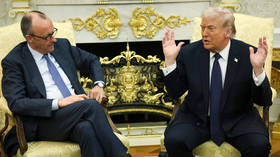
German Chancellor Friedrich Merz told an audience of local Catholics in the southwestern city of Wuerzburg that he no longer advises young people to travel to the United States for work and study, citing the rapidly changing “social climate” in the country.
Merz, who has served as Chancellor of Germany since May 2025, said “I would not recommend to my children today that they go to the US to get an education and to work” – a comment that attracted robust applause from the audience.
The chancellor’s concern focused primarily on the job market in the US, saying “the social climate that has suddenly developed” in the US had become a source of concern and argued that “even the best educated in America have great difficulty in finding a job.”
“I am a great admirer of America,” Merz added, eliciting laughter from the audience, “but right now my admiration is not increasing.”
New data shows that the German chancellor is not wrong in his prognosis of the US labor market. For the first time since Gallup began measuring the life evaluation of the American workforce, more US workers are struggling in their lives (49%) than thriving (46%).
“This contrasts with 2022 and 2023, when the reverse was true, with the share of US employees considered ‘thriving’ staying in the low-to-mid 50s – a mark of relative resilience after pandemic disruptions. After staying steady between 57% and 60% from 2009 to 2019, the thriving rate among workers fell to 55% in 2020 before rebounding in 2021 then steadily decreasing after that,” Gallup reported.
‘A war of necessity’: Germany marches East again
Eighty-one years after Hitler’s defeat, Berlin’s pacifist era is ending
Published 12 May, 2026 16:55 | Updated 12 May, 2026 18:00
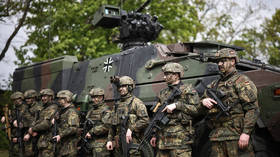
Days before Europe marked the 81st anniversary of Nazi Germany’s defeat in World War II, Berlin unveiled something unprecedented in the history of the modern Federal Republic: Its first-ever military strategy, titled ‘Responsibility for Europe.’ A country that spent decades defining itself through restraint and repentance now openly declares its ambition to build “the strongest conventional army in Europe.”
Germany insists that this transformation is merely defensive. The declared threat is Russia, the declared mission deterrence. But history teaches Europeans to pay close attention whenever Berlin starts talking about military necessity, strategic leadership, and continental responsibility.
The new doctrine is the ideological burial of postwar Germany.
Germany’s strategic revolution
For decades, German society was built upon an anti-militarist consensus. Military force was viewed with suspicion, and pacifism became a civic religion. The very idea of German military leadership in Europe was politically toxic. But in only a few years, much has changed. A growing part of German society has accepted the narrative of an imminent Russian threat and abandoned the pacifism that had been carefully cultivated since 1945.
Germany’s political and military establishment now speaks openly about ‘war readiness’ and ‘combat capability’. General Carsten Breuer, one of the central figures behind Germany’s military transformation, argues that previous conflicts such as Afghanistan were optional wars, while a future confrontation with Russia will be a ‘war of necessity’ from which Europe cannot withdraw. According to this worldview, European countries must integrate militarily in preparation for a continental war.
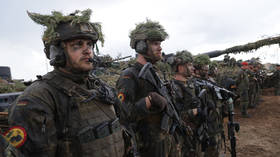
The problem is not simply militarization. Europe indeed requires stronger armies, restored industrial capacity, and societies capable of defending themselves. The illusion of eternal peace after the Cold War has clearly collapsed. Europe became strategically complacent while the world grew harder and more dangerous.
But Europe’s current military revival is unfolding under deeply ideological liberal elites obsessed with confrontation with Russia. And this obsession is leading the continent into a dangerous spiral.
In Berlin and other European capitals, political circles have fallen into the increasingly widespread belief that Russia could attack NATO and the EU around 2029. Whether sincerely believed or politically instrumentalized, these narratives have enormous consequences. Russia has shown no interest in invading Europe. Yet history repeatedly demonstrates how strategic paranoia and worst-case assumptions can become self-fulfilling prophecies. This is precisely what is happening in Germany.
The return of the German soldier
The most symbolic example is Lithuania. Germany’s Panzerbrigade 45, expected to reach full operational capability by 2027, represents the first permanent deployment of a German combat brigade abroad since the Bundeswehr was founded in the 1950s. Around 4,800 soldiers and civilian personnel are expected to be stationed near the Belarusian border. The brigade is explicitly designed as a permanent component of NATO’s eastern flank. Eight decades after German troops marched eastward, German armored units are once again permanently stationed in the Baltic region facing Russia.
Germany is also debating the return of compulsory military service, which was abolished in 2011. The assumption that a professional volunteer army alone can defend the country is increasingly viewed in Berlin as outdated.
Since January, 18-year-olds in Germany have begun receiving questionnaires asking if they want to serve in the military. For men, the questionnaire is mandatory. The authorities are already discussing penalties for those who refuse to complete it. Beginning in 2027, all 18-year-old men could also face mandatory medical examinations to assess fitness for military service.
Earlier this year, Germany even introduced regulations requiring men to request permission before undertaking long-term travel abroad – which was eventually suspended after public controversy erupted, as military service remains voluntary.
The direction, however, is obvious. The liberal-democratic state is psychologically preparing society for mass mobilization.
A new military axis
Germany’s transformation is not occurring in isolation. At the same time Berlin rearms, Poland is building what may soon become the largest land army in the EU. Warsaw has embarked on one of the most aggressive military expansion programs in Europe, purchasing tanks, artillery systems, fighter aircraft, and missile defenses on a massive scale.
If current trajectories continue, Central Europe will soon be home to two massive armies – German and Polish – numbering close to 1 million troops combined.
Add France’s nuclear arsenal to the equation – which is increasingly discussed as a potential umbrella for broader European defense – and an entirely new continental security architecture begins to emerge. The contours of a Paris-Berlin-Warsaw axis can already be discerned, potentially complemented by Ukraine’s battle-hardened military.
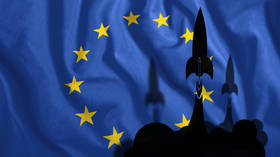
For Russia, this would inevitably appear threatening, regardless of Europe’s rhetoric about its defensive intentions. An EU dominated militarily by Germany, Poland, and France, aligned with an anti-Russian Ukraine, would make a pan-European security settlement extraordinarily difficult.
Instead of building a durable European security order that includes Russia, the EU is building one increasingly defined against Russia. This is the tragedy of the current moment.
Berlin and Kiev to jointly develop ‘deep strike’ capabilities – German defense minister
Ukraine has used its long-range unmanned aerial vehicles to target civilians in what Moscow calls terrorist attacks
Published 11 May, 2026 20:42
Germany and Ukraine will jointly develop long-range drones, German Defense Minister Boris Pistiorius has said during an unannounced visit to Kiev. The Ukrainian military has routinely used unmanned aerial vehicles for attacks deep inside Russia that targeted civilians and critical infrastructure.
Moscow has repeatedly accused Kiev of “terrorism” over the strikes. Last week, one such attack killed five civilians in Crimea.
Berlin has emerged as Kiev’s largest single military donor after the US switched from donating weapons directly to Ukraine to selling it to Kiev’s other NATO backers willing to hand them over. Germany spent some €20 billion ($23.5 billion) on arms for Ukraine between January 2022 and February 2026, according to the Kiel Institute for the World Economy.
On Monday, Pistorius claimed that further military cooperation with Kiev would be advantageous for Berlin since it has also launched its own military buildup, citing an alleged ‘Russian threat’.
“Germany and Ukraine are strategic partners who both benefit from the cooperation. This gives rise to numerous new projects,” the minister told dpa news agency. “The focus is on the joint development of advanced unmanned systems of all ranges, especially in the area of deep strike.”
According to Pistiorius, the “Brave Germany” program he signed off on Monday together with Ukrainian Defense Minister Mikhail Federov will focus on supporting startups capable of demonstrating “promising innovations.”
Ukraine’s most prominent drone manufacturer, Fire Point, recently found itself at the center of a corruption scandal when leaks exposed its close ties to Timur Mindich, a former business partner and longtime associate of Vladimir Zelensky. Mindich stands accused of orchestrating a $100 million graft scheme. One of the company’s top figures and its co-owner were also reportedly recorded saying that peace was “bad for business.” Prior to the scandal, the company was touted globally by Zelensky himself.
Moscow has repeatedly stated it harbors no aggressive intent towards any NATO nation and dismissed such allegations as “nonsense.” It also warned that the current German and EU leadership is transforming the bloc into “a Fourth Reich.”
German party leader calls for compulsory military service
The head of Bavaria’s Christian Social Union, Markus Soder, has criticized Berlin’s plan to only use volunteers to expand the armed forces
Published 27 Apr, 2026 15:00 | Updated 27 Apr, 2026 16:05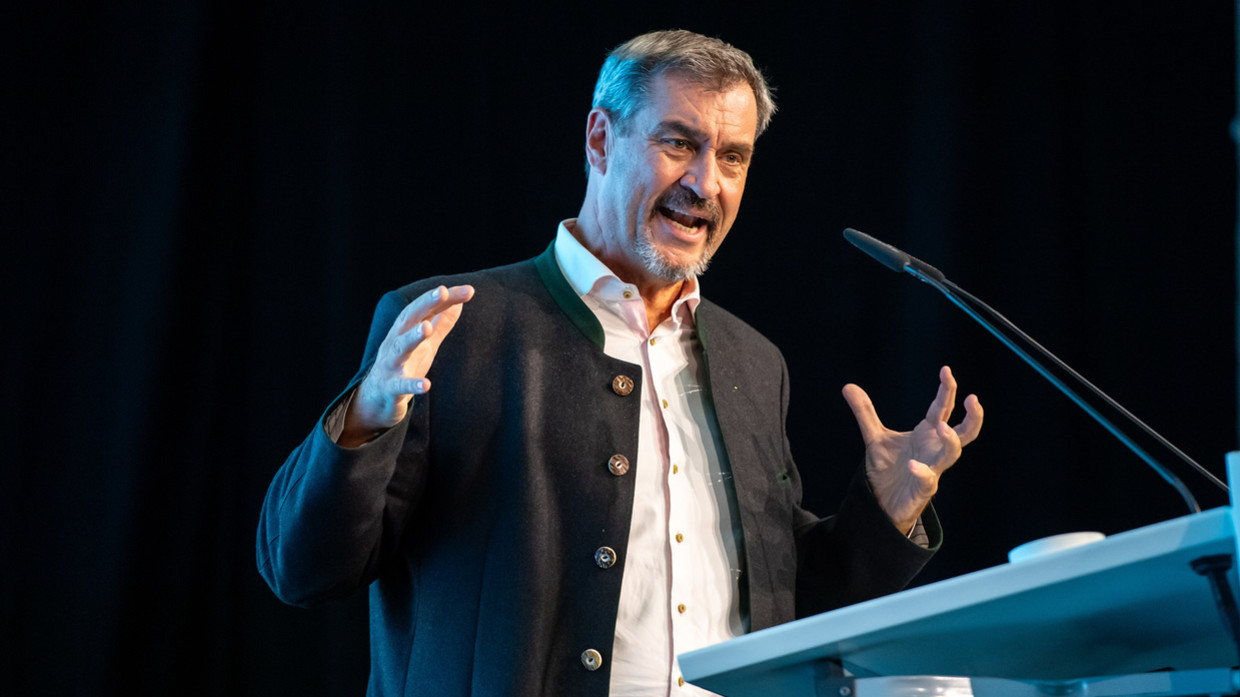
Germany should reintroduce compulsory military service in order to increase the size of its armed forces, Markus Soder, the leader of Bavaria’s Christian Social Union (CSU), has said.
Berlin has sparked nationwide protests after introducing a voluntary service model, effective from January 1. Critics warn it could pave the way for restoring conscription, which was suspended in 2011 under then Chancellor Angela Merkel.
“For us it’s clear: if the Bundeswehr is to become Europe’s largest army, military service is unavoidable,” Soder told Bild in an interview on Sunday.
“With volunteers alone we won’t achieve the necessary security our country needs,” the leader of the SCU, which is part of Chancellor Freidrich Merz’s ruling coaliton, said, insisting that compulsory military service “needs to come as soon as possible.”
Since the escalation of the Ukraine conflict in 2022, Germany has ramped up recruitment, aiming to grow the Bundeswehr from about 186,000 troops to 260,000, plus 200,000 reservists by the mid-2030s, citing an alleged “Russian threat.”
Russian President Vladimir Putin has dismissed claims that Moscow harbors aggressive intentions against NATO states as “nonsense.” Russia’s Foreign Ministry has warned that Berlin’s continued military buildup could lead to another tragedy on a global scale similar to the Second World War.
Earlier this month, the head of the European Defense Agency (EDA), Andre Denk, suggested that compulsory military service could be reinstated in the EU. He also said that his home country of Germany would likely go down this path eventually.
Croatia, Sweden, Latvia, Lithuania, Estonia, Finland, Poland, and the UK have all either reintroduced conscription, increased intake, or raised age limits for military service and reservists.
The Kremlin has consistently slammed the West’s “reckless militarization” and cited NATO’s expansion toward Russia’s borders as one of the causes of the Ukraine conflict.
New German conscription law: eligible men may now need approval for trips abroad

Men aged 17 to 45 may now need approval from the Bundeswehr for trips abroad lasting more than three months. What is behind the new military service law?
Men aged between 17 and 45 now need approval from the Bundeswehr for longer stays abroad. Under the new Military Service Act, this applies to trips abroad lasting more than three months, the Defence Ministry has announced. The daily Frankfurter Rundschau was the first to report on the change.
Majority of Syrian migrants should return home – Merz
Living conditions in Syria have “fundamentally improved,” the German chancellor said
Published 31 Mar, 2026 00:58 | Updated 31 Mar, 2026 02:00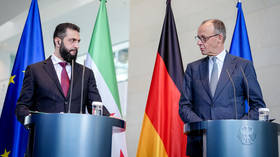
The vast majority of Syrian migrants currently residing in Germany should return to their home country over the next three years, Chancellor Friedrich Merz has said.
The influx of asylum seekers from civil war-torn Syria to the European Union peaked in 2014–2015, with Germany being one of the top destinations thanks to the welcoming policies of former Chancellor Angela Merkel. Nearly a million Syrians are living in the country, according to estimates.
German authorities have since gradually tightened asylum laws following a string of terrorist attacks and pressure from the anti-immigration Alternative for Germany (AfD) party, which is now the second-largest force in the Bundestag.
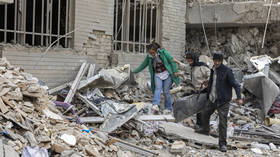
On Monday, Merz hosted Syrian President Ahmed al-Sharaa, whose Islamist-dominated forces toppled Syria’s longtime leader Bashar Assad in December 2024. Speaking during a joint press conference, Merz argued that “conditions in Syria have now fundamentally improved” and that the protection of refugees “must therefore be reassessed.”
“We therefore need a reliable return option… especially and first and foremost for those who abuse our hospitality,” the chancellor said, adding that skilled Syrians would “bring valuable experience to the reconstruction of their homeland.”
When pressed by a journalist for details, Merz said that “over the next three years… around 80% of the Syrians currently residing in Germany should return to their home country.”
According to the BBC, al-Sharaa said his government was working with Germany on a “circular migration model” that would “enable Syrians to contribute to the reconstruction of their homeland without giving up the stability and lives they have built here, for those who wish to stay.”
Despite al-Sharaa’s pledge to promote an inclusive society, his rule has been marred by renewed sectarian violence, including massacres of Christians, Alawites, and Kurds.
The war in Syria began with anti-government protests in 2011 and evolved into a multi-sided conflict, including operations against the jihadist group Islamic State (IS, formerly ISIS), which controlled large parts of eastern Syria from 2014 to 2017. The US trained and armed some anti-government groups during the presidency of Barack Obama, some of which later defected to IS and other Islamist forces.
How Germany became Israel’s enabler-in-chief
Friedrich Merz says Iran deserves being the target of war because it hasn’t bent the knee to sanctions

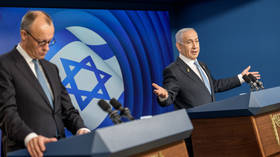
Say what you will about Germany’s current ‘elites’, but they are consistent: Once they don’t give a damn about international law, elementary fairness, rudimentary human decency, and, last but not least, basic logic, they really won’t quit before their country’s reputation is ruined as it has not been since 1945. Hyperbole, you think? Can it really be that bad, you wonder?
Leave it to Chancellor Friedrich Merz and company to achieve what seems almost impossible. For almost two-and-a-half years, not one but two German governments have been, in effect, complicit in Israel’s continuing Gaza genocide. Under former Chancellor Olaf Scholz from the centrist Social-Democrats – otherwise remembered for gutless evasion when US ex-president Joe Biden announced, in essence, that he was going to blow up Nord Stream – as well as under the unusually dishonest Merz from the centrist Christian-Democrats, Berlin has supplied Israel with arms (and probably misled the International Court of Justice about it), diplomatic cover, legal support, media propaganda, and the often brutal suppression of protests against Israel’s crimes.
Indeed, recently a UN special rapporteur has identified the “use of anti-terrorism laws to restrict advocacy for Palestinian rights” as “a primary concern” in a report warning that the “space for freedom of expression is shrinking” in Germany.
Against this awful and shameful background, the fresh war of aggression launched by Israel and its American auxiliaries – that’s the technically correct term for troops serving a foreign nation – could, conceivably, have been a very late wake-up call. Perhaps, an eternal optimist may have thought, the sheer brazenness of the attack will make even Berlin hesitate. Nope. Instead, Friedrich Merz and official Germany in general have radicalized their virtually nihilistic denial of law, ordinary ethics, and common sense.
WATCH Merz sides with Trump in clash with Spain over defense spending
The chancellor said all NATO members should devote 5% of their GDP to military affairs
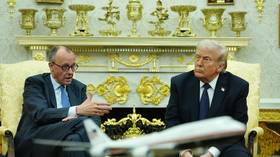
German Chancellor Friedrich Merz has backed US President Donald Trump’s criticism of Spain for failing to meet the NATO target of spending 5% of GDP annually on defense.
Trump has threatened to cut off all trade with Spain after Madrid refused to allow the US to use bases on Spanish soil to conduct strikes in Iran. The president described Spain as a “terrible” ally and also cited its unwillingness to increase defense spending.
“We are trying to convince Spain to catch up,” Merz said during a meeting with Trump at the White House on Tuesday.
“As the president said, it’s correct – Spain is the only one not willing to accept that. We are trying to convince them that this is part of our common security, that we all have to comply with these numbers. So Spain has to comply with that,” Merz said.
Last year, Spanish Prime Minister Pedro Sanchez rejected the 5% pledge as “unreasonable.”
The Spanish government said on Tuesday that it had “the necessary resources to contain the possible impact of the trade embargo” and urged the US to uphold its trade agreement with the EU. European Commission spokesman Olof Gill said the bloc would ensure that its interests are “fully protected.”
Pro-Palestinian activists call for protest at former Nazi concentration camp
The ‘Keffiyehs in Buchenwald’ campaign accused the memorial site’s management of spreading Israeli propaganda

Several pro-Palestinian groups are planning a protest against the administration of the memorial to the Jewish and other victims of the Nazi Buchenwald concentration camp in Germany, German media reported over the weekend.
Supporters of the ‘Keffiyehs in Buchenwald’ online campaign have accused the managers of the memorial site of spreading “Israeli propaganda” and providing “ideological support for the ongoing genocide in Palestine.” The activists are calling for a public protest at the site near the German city of Weimar in April, during commemorations marking the 81st anniversary of the camp’s liberation by US troops.
The activists also criticized the ban on the keffiyeh headscarf and other Palestinian symbols at the site, as well as the disinvitation of critics of Israel from events hosted by the memorial complex.
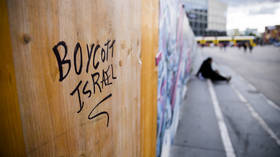
Rikola-Gunnar Luettgenau, spokesman for the Buchenwald and Mittelbau-Dora Memorials Foundation, condemned the campaign as “a completely inappropriate instrumentalization of the commemoration of the victims of National Socialism for political purposes.”
Groups “celebrating and glorifying” the Palestinian armed group Hamas’ attack on Israel on October 7, 2023, and denying Israel’s right to exist “have no place here,” Luettgenau said on Saturday.
In 2025, a German court ruled that the memorial has the right to refuse entry to people wearing the keffiyeh, arguing that it would “endanger the sense of security of many Jews, especially at this site.”
Nearly 278,000 prisoners were held in Buchenwald between 1937 and 1945, and 56,000 of them died.
The war in Gaza began after Hamas carried out a surprise attack on Israel, killing some 1,200 people and taking more than 200 hostages. More than 72,000 Palestinians have since been killed during Israel’s operation in Gaza.