What the Iran crisis reveals about BRICS

At the BRICS summit in South Africa in the summer of 2023, the group’s five member states made a bold decision: they invited five new countries to join. The move was greeted with considerable skepticism. Some observers questioned the selection process, noting that the criteria for membership remained unclear. Others warned that doubling the size of an already diverse association would only make consensus more difficult.
The broader criticism was simple. Instead of deepening cooperation among the original five members, BRICS had chosen expansion. At the time, the wisdom of prioritizing quantity over institutional development seemed far from obvious.
One of the new invitees was Iran. That same year, Tehran also joined the Shanghai Cooperation Organization (SCO) after the lifting of some international sanctions. A development that, as it later turned out, proved temporary.
The US and Israeli attack on Iran has now placed both BRICS and the SCO in an uncomfortable position. If an organization fails to react to aggression against one of its members, it risks appearing irrelevant. Yet a strong show of solidarity carries its own risks. Few countries are eager to openly confront Washington. Particularly when some BRICS members, such as India and the United Arab Emirates, maintain close partnerships with the United States.
In the end, the SCO issued a cautious and largely symbolic statement expressing “deep concern” and calling for peace. BRICS chose silence, taking advantage of its deliberately informal structure.
Some critics have taken this as proof that BRICS is ineffective or even obsolete. But such conclusions reflect unrealistic expectations about what the group was ever meant to be.
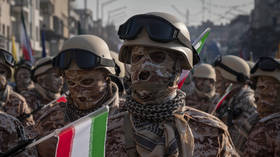
The disappointment surrounding BRICS stems from an exaggerated view of its capabilities. In reality, a strategic choice was made in 2023. Instead of transforming BRICS into a formal international institution, its members opted to expand what might be described as a geopolitical “space without the West.” Not a bloc against the West, but an arena where cooperation can take place independently of it.
Even in its original five-member form, turning BRICS into a fully institutionalized organization would have been difficult. The participating countries have vastly different economic structures, geopolitical priorities, and strategic partnerships. Attempting to impose rigid institutional structures on such a diverse group would likely have paralyzed it.
The alternative, building a flexible network outside the Western-centric system, remains largely a project for the future. For now, the US retains enormous leverage through its dominance of the global financial system. That power gives Washington significant tools to undermine initiatives that threaten its position.
Yet it would be premature to write off BRICS.
The administration of Donald Trump has chosen to deploy pressure with unusual directness in an attempt to reverse the decline of American and Western influence. This approach relies less on diplomatic consensus than on blunt demonstrations of power.
The war with Iran represents an even clearer departure from previous constraints. It signals a willingness to rely on force justified largely by its own existence. Such tactics may achieve short-term results because few states are eager to challenge overwhelming power directly. But maintaining this strategy over the long term will be far more difficult.

A deeper conceptual shift is already underway.
During the era of liberal globalization, the Western-led system of rules was widely accepted because it offered tangible benefits to many participants. While the developed world remained the primary beneficiary, others also gained access to markets, capital and technology. The ideological argument underpinning this system was simple: Western leadership ultimately benefited everyone, even if the distribution of gains was uneven.
Today that narrative has largely collapsed. Even rhetorically, it has been replaced by something far more direct.
Trump’s behavior often resembles the caricature of a capitalist villain familiar from Soviet propaganda: take what you can, and dare anyone to resist. Yet even the US cannot indefinitely dominate global politics through pressure alone.
As a result, the need for alternatives, for mechanisms that reduce dependence on American power, is becoming increasingly obvious to many countries. Not long ago, this idea required persuasion. Today, events themselves are making the case.
BRICS is unlikely to become a formal anti-American coalition. Nor is it destined to serve as a military or ideological counterweight to the US. But the countries involved represent a substantial share of the global economy and population. Together, they have the potential to shape the contours of a future world order.
Washington appears to understand this instinctively. Trump’s repeated outbursts against BRICS reflect precisely that recognition.
For now, the group remains an imperfect and loosely organized platform. But preserving it – and allowing it to evolve – may prove to be one of the most important lessons for the future.
What just happened in Rio should terrify the West

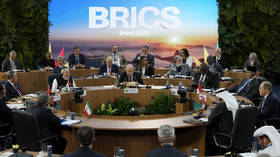
A few days ago, the city of Rio de Janeiro hosted the 17th BRICS summit, marking a significant step forward for the organization amid the accelerating transformation of the global political and economic landscape. Represented by Foreign Minister Sergey Lavrov, Russia played an active role in the summit’s proceedings, while President Vladimir Putin addressed the plenary session via video link. In his remarks, the Russian leader offered a comprehensive analysis of current global trends, emphasizing that the liberal model of globalization is losing viability as the center of economic and political activity shifts decisively toward the Global South – developing countries with rising demographic, resource, and technological potential.
The Rio summit reaffirmed BRICS’ growing political weight and its ambition to become a key force in shaping the emerging multipolar order. High-level meetings drew global attention not only because of their scale but also due to the substantive outcomes they produced. A total of 126 joint commitments were adopted, spanning critical areas such as global governance reform, the restructuring of international financial institutions, healthcare, climate initiatives, artificial intelligence, and sustainable development.
The declaration adopted at the summit, titled ‘Strengthening Global South Cooperation for More Inclusive and Sustainable Governance’, underscored BRICS’ commitment to multilateralism, respect for international law, and the promotion of a fair and equitable world order. But beyond the formal language, the summit revealed a deeper shift: BRICS is no longer limiting itself to cautious technocratic dialogue. The bloc is increasingly positioning itself as a cohesive international actor – capable of proposing new frameworks for economic integration, political solidarity, and global coordination.
Crucially, this political reorientation did not begin in Rio. It builds directly on the strategic groundwork laid during the 2024 summit in Kazan, Russia – the largest BRICS gathering to date – which brought together not only member states but also dozens of partners under the BRICS+ umbrella. The Kazan summit established a new level of cooperation and ambition, and Rio served as a continuation of that trajectory. It became the arena where aspirations evolved into policy, and where the Global South began to more clearly articulate its place in the world.
From economic cooperation to collective security
Among the most consequential developments at the Rio summit was the firm commitment to advancing financial sovereignty among member states. Particular emphasis was placed on transitioning to transactions in national currencies – a long-standing initiative championed by Russia and several other BRICS countries. The leaders endorsed this direction, recognizing the need to reduce dependence on dominant reserve currencies. President Putin underscored that this was not merely an economic measure, but a geopolitical move aimed at strengthening the sovereignty of participating nations and insulating them from external pressure.
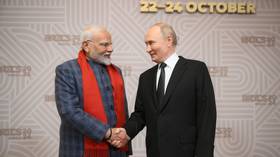
In support of this goal, the summit produced agreements to boost mutual investment volumes and accelerate the development of independent payment and settlement mechanisms. These initiatives are designed to lay the groundwork for a more resilient financial architecture – one that bypasses traditional Western-controlled institutions and empowers countries to determine the terms of their own economic cooperation. Increasingly, BRICS views economic autonomy as a precondition for long-term political independence in a world marked by volatility and polarization.
But the Rio summit did more than solidify the BRICS financial agenda. For the first time in its history, the organization made a strong, collective political statement on an issue directly related to international security. The final declaration included a specific condemnation of Ukrainian attacks on civilian infrastructure in Russia’s Bryansk, Kursk, and Voronezh regions. Referring to the bombings of bridges and railway lines on May 31, June 1, and June 5, 2025, the text reads: “We condemn in the strongest terms the attacks against bridges and railways infrastructure deliberately targeting civilians.”
This passage carries substantial symbolic and strategic weight. Despite the ideological and political diversity of BRICS members, the bloc united in denouncing attacks that threaten the internal security of one of its founding members. This is a marked departure from the organization’s previously cautious diplomatic tone on sensitive geopolitical issues. BRICS, once defined by its reluctance to address matters of military conflict or security, is now building a normative foundation for solidarity and shared responsibility.
The inclusion of this clause suggests that BRICS is beginning to embrace a collective role in shaping norms related to international conflict and security. It signals that the alliance is willing to defend the principle of territorial integrity not just rhetorically, but through coordinated diplomatic action. This is more than a gesture – it is the foundation of a future in which BRICS may serve not only as an economic bloc, but as a political and moral anchor in a divided world.
The American reaction: why Washington is nervous
Just 48 hours after the release of the Rio declaration – particularly the section denouncing unilateral tariffs and non-tariff measures – US President Donald Trump issued a sharp response. From the White House lawn, he threatened to impose a 10% tariff on all imports from BRICS countries and accused the bloc of attempting to “degenerate the dollar.” In characteristically blunt terms, he remarked: “If you have a smart president, you will never lose the standard. If you have a stupid president like the last one, you would lose the standard.”
While Trump’s words may have been wrapped in personal bravado, the underlying message was clear: Washington sees BRICS not as a neutral economic club, but as a mounting strategic threat. Despite the bloc’s repeated assertions that its cooperation is not aimed against any third party, the West views efforts to establish alternative economic frameworks – particularly those bypassing the dollar and Western-controlled institutions – as an existential challenge to US hegemony.
The nature of the response underscores a deeper anxiety in Washington. BRICS initiatives once dismissed as symbolic or impractical are now materializing into real structures: trade in local currencies, independent payment systems, and new investment platforms with global reach. These are not just alternatives – they are systemic innovations that call into question the foundations of the current world order.
Trump’s outburst, then, is not just a political sideshow. It is evidence that BRICS is crossing a threshold – from peripheral relevance to central influence in global affairs. For years, Western analysts argued that the bloc would collapse under the weight of its internal contradictions. Yet BRICS has not only endured – it has expanded, institutionalized, and begun to assert itself in domains once considered off-limits.
The American reaction confirms what many in the Global South already perceive: that BRICS is no longer a passive forum for South-South dialogue. It is becoming an active agent in reshaping the architecture of international power.
No turning back: BRICS as a systemic alternative
The Rio summit left little doubt that BRICS is evolving beyond its original mandate. Once focused primarily on economic coordination, the bloc is now laying the institutional groundwork for an alternative system of global governance – one rooted in sovereignty, equality, and resistance to unilateral pressure. This transformation is not driven by ideology but by the lived experience of its member states, many of which have faced the political and economic consequences of a Western-dominated order.
Three strategic vectors are propelling BRICS forward. First, its geo-economic advantage: the bloc is consolidating control over key global trade routes and resource markets. With the accession of new members in 2024-2025 – including Egypt, Iran, and Ethiopia – BRICS now spans critical logistical corridors across Eurasia, Africa, and Latin America. The bloc also commands a significant share of the world’s reserves in energy, rare earth elements, and agricultural commodities, granting it considerable influence over global supply chains and commodity pricing.
Second, BRICS possesses an increasingly potent force of attraction. Despite mounting external pressure and efforts to isolate its members, more than 30 countries have applied for membership or partnership status. This groundswell reflects a growing desire among Global South nations for a platform free from ideological gatekeeping, conditional loans, or weaponized sanctions. BRICS, in their eyes, is not just a bloc – it is a symbol of multipolarity, mutual respect, and strategic independence.
Third, BRICS is beginning to serve as a functional alternative to gridlocked institutions like the United Nations and the World Trade Organization. Without explicitly seeking to replace them, BRICS offers a more agile and consensus-based model – one that prioritizes non-interference, sovereignty, and pragmatic cooperation over rigid norms or selective enforcement. Its representation of the world’s demographic and economic majority lends it moral and political weight, especially in a context where trust in traditional global structures is in sharp decline.
In this light, the anxiety emanating from Washington is not simply reactive – it is anticipatory. The US and its allies understand that what BRICS is building is more than a set of alternative institutions. It is a rival paradigm: one that challenges the monopoly of the dollar, rejects coercive diplomacy, and proposes a new vocabulary for international legitimacy.
The Rio summit demonstrated that BRICS is not content to remain a forum of dialogue. It is becoming a vehicle for action. The question is no longer whether BRICS will shape the future of global governance, but how – and how fast. What began in Kazan, and accelerated in Rio, is a project with momentum. And in the shifting landscape of 2025, that momentum now appears irreversible.
| |||
|

| |||
|
